Brand Ambassador Staffing for Agency Programs
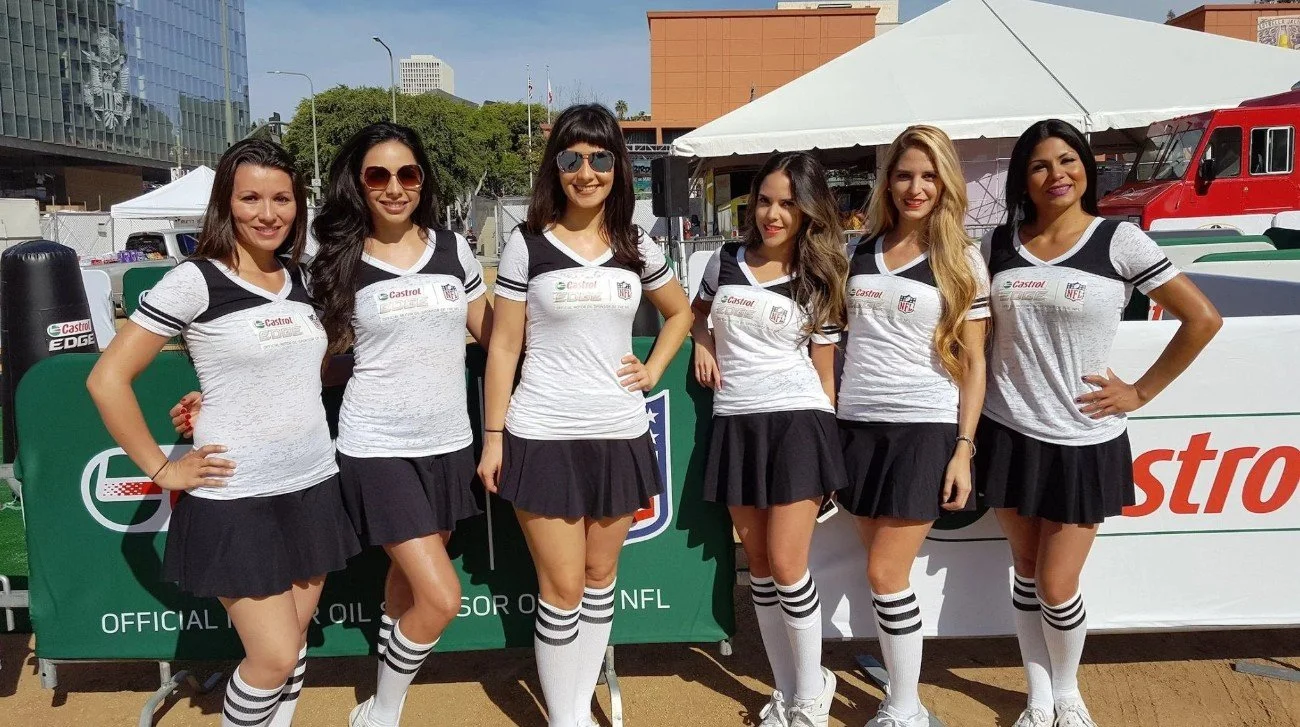
Our event staff supporting Castrol at a brand activation event
When an agency is running an activation across several cities, staffing can quickly become one of the most complicated parts of the program. You need people who can represent the brand well, keep the experience moving and handle real conversations with consumers. This guide is for agencies, producers and account teams planning staffed brand activations through an experiential staffing partner. It covers the main staff roles, practical staffing ratios, briefing requirements, casting and uniform coordination, and the information clients should receive after each event.
Brand Ambassadors, Field Managers and Tour Staff
These roles work together, but they are not interchangeable. Clear responsibilities prevent gaps during the event and help agencies build a realistic staffing budget.
Brand ambassadors are the public-facing representatives of the campaign. They welcome guests, explain the product, demonstrate features, distribute samples, support lead capture and encourage people to take the next action. Depending on the program, ambassadors may also guide guests through an experience, answer product questions, distribute merchandise, collect consumer feedback or direct attendees to another part of the activation. The best brand ambassador is not simply outgoing. They must be able to listen, adjust their approach and communicate accurately without sounding scripted.
A field manager is responsible for the operation of the activation, not just guest interaction. This person is the agency’s eyes and ears on-site and the main point of contact for the client or producer. Their responsibilities may include checking staff in, leading the pre-event briefing, completing uniform checks, managing breaks, positioning team members, monitoring inventory and handling client requests. The field manager also escalates consumer, venue or operational issues and submits the daily report. For larger programs, one field manager may oversee several team leads. A useful starting point is one lead for approximately every eight to 12 ambassadors, although the final structure should reflect the venue size, campaign complexity and travel requirements.
Tour staff support campaigns that move between cities, venues or event dates. They may travel with the activation and help preserve consistency from one market to the next. A traveling team can include a tour manager, regional field managers, lead ambassadors, product specialists, demonstrators and logistics support.
This model is particularly useful when the activation includes complex equipment, detailed product education or a carefully planned guest journey. It also reduces the risk of each market interpreting the campaign differently. A brand ambassador staffing agency can help determine whether the program needs local teams, traveling staff or a combination of both.
Staff-to-Attendee Ratios by Activation Type
There is no universal staffing ratio. The right number depends on expected attendance, peak traffic, activation footprint, guest dwell time and the level of interaction required.
A passive sampling table needs fewer staff than a product demonstration, lead-generation experience or multi-step game. Planning only around total attendance can leave a team overwhelmed during the busiest periods.
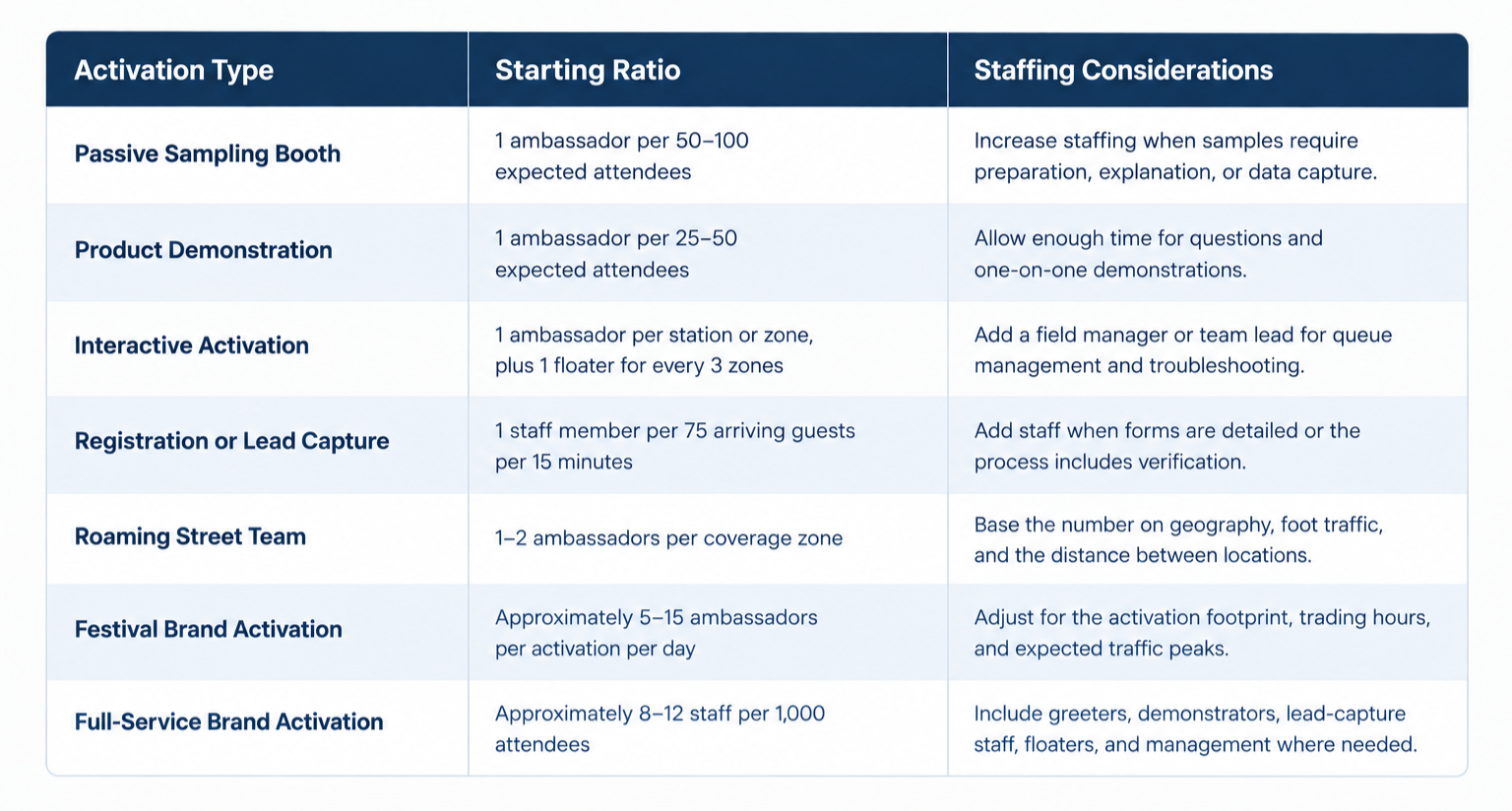
Event staffing ratios by activation type and key staffing considerations.
These ratios are planning guides rather than fixed rules. For a standard consumer-facing activation, one ambassador per 50 to 100 expected attendees is often a reasonable starting point. More involved experiences may need one ambassador per 25 to 50 attendees because each interaction takes longer. It is equally as important to also plan for peaks rather than averages. If an event expects 3,000 people across six hours, that does not mean 500 people will arrive evenly every hour. Doors opening, speaker changes, lunch periods, schedule announcements and the final hour can all create sudden increases in traffic. Build additional coverage into the busiest windows and consider staggering shifts. For longer activations, proper breaks are essential. Staff who are tired, hungry or unclear about their next assignment will not deliver the same quality of engagement throughout the day.
What a Good Brief Contains
A good brief turns strategy into behavior. It should tell ambassadors why the activation is happening, what success looks like, what to say and how to handle common situations.
Start by explaining the purpose of the campaign. Is the priority awareness, sampling, trial, lead generation, education, sales support or content creation? Ambassadors perform better when they understand the goal behind the task instead of receiving a list of disconnected instructions.
The brief should also describe the target audience. Include useful information about who the team is trying to reach, how familiar they may be with the brand, what might make them stop and engage, and which questions or objections are likely to come up.
Keep the key messaging focused. Two or three clear talking points are easier to remember than a long product document. Include the brand story, product benefits, approved claims, important facts and any statements staff must avoid. A frequently asked questions section can help ambassadors respond naturally while staying within the approved messaging.
The desired tone should be clear as well. A premium skincare activation, a sports sponsorship and a student sampling campaign may all require different energy levels and conversation styles.
The brief should then explain the guest journey. For example, an ambassador may welcome the guest, ask a qualifying question, explain the product benefit, invite participation, deliver the sample or experience, encourage a sign-up and thank the guest before resetting the space.
This structure creates consistency without forcing every conversation to sound identical. Guests should feel that they are having a natural interaction, not listening to a memorized script.
Practical information is just as important as brand messaging. Include the venue address, check-in time, transport or parking details, shift schedule, break plan, on-site contact, emergency procedures, inventory process, lead-capture instructions and photography rules.
The brief should also explain what staff should do if equipment fails, stock runs low, a guest raises a complaint or a question falls outside their knowledge. Experienced brand ambassador companies treat the brief as a working document rather than a quick message sent the night before an event.
Uniforms, Fittings and Casting Coordination
Casting should begin with the audience and the role, not just a generic preference for “friendly” staff. Look for people who match the required communication style, can learn the product and are comfortable performing the actual duties of the activation.
Before recruitment begins, confirm the experience level, language requirements, physical duties, availability, travel requirements and any age, certification or compliance restrictions. If staff will demonstrate technical products, handle sensitive equipment or explain detailed information, the casting process may include auditions, role-play or a short product-learning exercise.
This gives the agency a better understanding of how candidates communicate under pressure. It also shows whether they can explain a benefit naturally and respond to a realistic consumer question.
Uniforms should be practical, brand-appropriate and ready before the first shift. Confirm garment sizes, footwear, outerwear, accessories, grooming standards and name badges. Outdoor events may also require weather contingencies, such as jackets, rain protection or additional footwear.
Fittings are especially important when staff are wearing custom garments, fitted uniforms or wardrobe that must look consistent in photographs. The staffing partner should keep a final roster showing each person’s confirmed size, role, market and arrival status. This makes it easier to identify gaps before the activation begins and arrange replacements when necessary.
For nationwide brand ambassador staffing, casting and wardrobe coordination should follow one central standard while allowing for local recruiting. This gives the client a consistent brand presence without making every market dependent on the same talent pool.
Reporting Back to the Client
Client reporting should go beyond a staff attendance list. The purpose of the report is to show what happened, what the audience did and what should change before the next event. The operational section should confirm staff attendance, shift times, late arrivals, absences, replacements, break compliance, activation opening and closing status, inventory issues and any venue or production concerns. The engagement data should connect directly to the campaign objective.
Depending on the program, this may include conversations, samples distributed, demonstrations completed, leads captured, sign-ups, product trials, content interactions or redemption activity. Agree on definitions before the event. For example, “engagement” could mean a passing conversation, a completed product demonstration or a qualified lead. If teams use different definitions across markets, the final data will be difficult to compare.
Qualitative feedback is also valuable. Brand ambassadors often hear questions and objections that do not appear in the numbers. Ask what guests wanted to know, which message created the strongest response, where people lost interest and whether the activation flow worked during peak traffic.
Photos can support the report by showing the activation in use, staff presentation and guest interaction. They should always follow the client’s consent and photography requirements. For ongoing programs, report quickly after each event and summarize trends across markets. An agency should not wait until the end of a national tour to discover a recurring stock problem, unclear message or staffing gap.
Build the Team Around the Experience
The strongest staffing plan starts with the guest journey, then works backward to roles, ratios, casting and reporting. Brand ambassadors create the interaction, field managers protect the operation and tour staff help maintain consistency across locations.
If you are planning a pop-up, festival, trade show or national activation, explore our event staffing and logistics services or speak with the team about a tailored staffing plan.
