
Controlled vs. Open-Field Activations: Where Emotion Tracking Works Best
Not every brand activation is built for emotion tracking. A tightly managed pop-up inside a shopping mall can capture facial expressions, dwell time, and sentiment at each touchpoint with impressive accuracy. The same approach falls apart on a chaotic festival field where thousands of people move unpredictably through an open-air site. Understanding the difference between controlled and open-field environments is essential for deciding when to invest in emotion analytics and when to rely on other KPIs.
This distinction matters because the wrong measurement strategy can waste budget and produce misleading results. Brands that try to force granular emotion tracking into uncontrolled settings often end up with incomplete data and frustrated staff. Meanwhile, brands that default to simple footfall counts in highly controlled spaces miss the chance to connect specific emotional moments to downstream conversions. The key is matching the measurement method to the environment and staffing the activation accordingly.
Controlled Environments: Trade Show Booths, Pop-Ups, and Immersive Experiences
Controlled activations share a few defining characteristics. They happen in enclosed or semi-enclosed spaces with defined entry and exit points. Traffic flows in predictable patterns. Attendees move through a designed journey with clear touchpoints. These conditions make it possible to instrument the experience with cameras, sensors, or structured survey moments that capture emotional response without disrupting the flow.
Trade show booths are a prime example. A 200-square-foot island booth at a major industry expo can be set up with check-in kiosks, demo stations, and meeting areas that each serve a specific purpose. Because the space is bounded and the audience is self-selected, brands can track how long visitors dwell at each station, which demos generate the most smiles or surprise, and how sentiment shifts from entry to exit. This level of detail supports brand lift studies that compare exposed attendees to a matched control group and measure incremental changes in awareness, favorability, or purchase intent.
Pop-up retail installations and immersive experiences operate on the same principle. A two-week brand house in a high-traffic urban location can guide guests through a sequenced narrative where each room or zone is designed to evoke a specific feeling. Emotion analytics can be layered onto these moments to identify which scenes drive the strongest positive response and which cause confusion or drop-off. The data becomes a blueprint for optimizing the journey before scaling to additional markets.
Staffing in controlled environments is about precision and consistency. A practical guideline for trade show booths is one staff member per 50 square feet of exhibit space, which translates to two to three people in a 10-by-10 booth and six to eight in a 20-by-20 space. Brand activations with multiple interactive stations need at least one ambassador per touchpoint plus floating staff for queue management and crowd engagement. When emotion tracking is part of the objective, staff must also be trained to position guests correctly for sensors, explain data capture transparently, and ensure that measurement does not interfere with the experience.
Supervision ratios matter as well. Once a team reaches ten or more staff, a dedicated on-site lead trained in reporting and time management becomes essential. This person oversees break rotations, monitors real-time traffic against capacity plans, and ensures that data quality standards are maintained throughout the day. In high-traffic immersive experiences using VR or AR, staffing may shift to one brand ambassador per two stations during normal periods and one-to-one during peak hours to support headset fitting, experience guidance, and safety monitoring.
Open-Field Activations: Festivals, Street Teams, and Large Outdoor Events
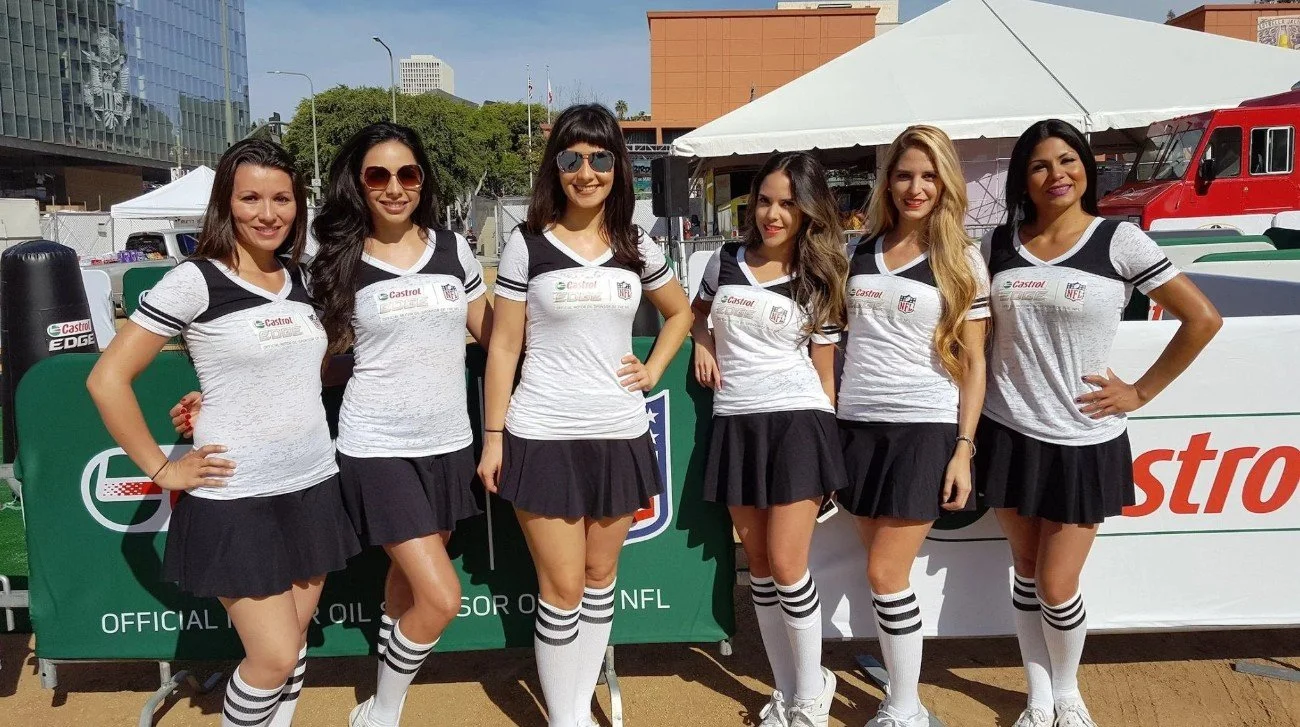
Open-field activations present a different set of challenges. Music festivals, sporting events, and street team campaigns take place in expansive, uncontrolled environments where attendees come and go freely. Foot traffic is massive and unpredictable. People may pass through an activation once, multiple times, or not at all. Under these conditions, trying to capture precise emotional data at every touchpoint becomes impractical and often unreliable.
This does not mean measurement should be abandoned. It means the KPIs must shift from granular emotion tracking to broader indicators of reach, engagement quality, and brand lift. Street teams, for example, are better evaluated on quality stops, audience fit, and response patterns rather than facial expression scores. Product reps at a festival sampling booth should be measured on demo completions, serious questions asked, and qualified handoffs to sales or CRM. Brand ambassadors in these settings are most useful when assessed on conversation quality, sentiment notes, and repeat interactions rather than dwell time at a specific station.
Festivals and large outdoor events require a different staffing calculus altogether. A common rule of thumb is one staff member per 200 to 300 expected passersby per hour for sampling and engagement. Another approach aims for one active staff member per 75 to 100 visitors per hour to ensure manageable engagement without burning out the team. These ratios account for the high volume of transient traffic and the need to maintain energy and brand consistency over long hours in challenging conditions.
Because open-field activations cannot rely on controlled sensor data, brands often turn to brand lift studies that use pre-exposure and post-exposure surveying across test and control groups. Attendees who interact with the activation form the exposed group, while a matched sample of non-attendees or pre-event respondents serves as the control. The lift score is the percentage-point difference between the two groups on metrics like awareness, favorability, or purchase intent. This method isolates the incremental impact of the live touchpoint without requiring precise emotion tracking at every moment.
Staffing in these environments prioritizes coverage, relief, and quality. Coverage refers to the non-negotiable minimum number of personnel needed on the floor to keep the footprint safe and functional. Relief is the buffer headcount required to absorb scheduled breaks, shift transitions, and unexpected traffic surges. Quality is the labor ratio needed to preserve complete brand messaging, thorough consumer qualification, and compliant data capture without cutting corners. A simple capacity planning formula multiplies active staff by their productive hours, divides by average interaction minutes, and applies a conservative utilization factor to estimate usable labor capacity.
Matching Measurement to Environment
The decision to use emotion tracking should start with a clear assessment of the environment. Controlled spaces like trade show booths, pop-ups, and immersive experiences offer the structure needed for camera-based analytics, sensor data, and moment-by-moment sentiment mapping. These are the settings where brands can confidently link specific emotional peaks to follow-up sequences and CRM outcomes. Open-field activations like festivals and street teams are better served by broader KPIs such as qualified interactions, brand lift scores, and staff-reported sentiment notes.
Staffing plans must reflect this choice. Controlled environments require staff who can manage both the experience and the measurement infrastructure without disrupting the flow. Open-field environments require staff who can maintain energy, qualify leads quickly, and capture high-level sentiment in fast-moving conditions. In both cases, the goal is the same: to generate reliable data that informs future investment and proves the commercial value of the activation.
Brands that get this right will stop treating measurement as an afterthought and start designing it into the activation from the beginning. They will choose emotion tracking where it works best and rely on other KPIs where it does not. They will staff their teams to match the demands of the environment and the objectives of the campaign. And they will walk away from each activation with clear evidence of what moved the needle and what did not.
