Event Staffing for Castrol
An event recap report turns a live activation into proof that your agency delivered. It shows your client what happened, what the program produced, what worked, what did not, and what should change before the next activation.
This event recap template is for experiential, PR, sponsorship, and field-marketing agencies that need to send clients a clear, professional post-event report without rebuilding one for every program. Use it after a sampling activation, brand-ambassador program, street team, product launch, sports footprint, or multi-market tour.
The goal is not to overwhelm your client with data. The goal is to give them a concise story they can share internally, defend to leadership, and use to approve the next program.
For agency programs, staffing and reporting should work together. Event Staffing Live provides nationwide event staffing for agencies, including brand ambassadors, street teams, tour managers, and field managers who can capture the on-site details your recap needs.
What an Event Recap Report Is For
A strong event recap answers three questions quickly: Did the program reach the right audience? Did the staff execute the activation as planned? And what should the client repeat, adjust, or stop doing next time?
Your client wants more than a photo gallery. They want evidence that their investment created meaningful interactions, samples, leads, content, and operational learning. A good recap also protects your agency because it documents the scope, staffing plan, execution decisions, and any issues that were outside your control.
Write the report for the person who has to explain the program internally. That might be a brand manager presenting results to leadership, a sponsorship lead reporting to a partner, or an account director answering questions from procurement.
The Event Recap Template
Copy this structure into Google Docs, a slide deck, or your agency’s reporting template. Keep the client-facing version to two to four pages. Put daily logs, staff schedules, raw lead exports, and extended photo galleries in an appendix.
Start with a program snapshot. Include the program name, event and venue, dates and activation hours, agency and key partners, primary objective, target audience, staffing plan, and deliverables. This section should let someone understand the activation in less than a minute.
Next, present results against plan. Lead with the numbers your client cares about most: staff scheduled and staff who worked, event hours delivered, consumer interactions, samples distributed, demonstrations completed, leads captured, qualified leads, sign-ups or redemptions, photos and videos captured, and incidents reported. Show the plan, the actual result, and a short note explaining any variance.
Then add a section on engagement and conversion. Explain how foot traffic became meaningful activity. Cover total interactions, interactions by day or activation zone, samples distributed, product demonstrations, leads captured, lead quality, and any sign-ups, trials, surveys, or redemptions. If the program was built for awareness rather than lead generation, focus on reach, conversations, sampling, and audience response instead.
Include a section on staff performance and execution. Report coverage by day and shift, attendance and substitutions, arrival and check-in, uniform compliance, product knowledge, messaging accuracy, lead-capture quality, and field-manager observations. Keep the tone factual. If a shift ran smoothly, say so. If something went wrong, explain the cause, the response, and the fix.
Finish the core report with incidents, risks, and recommendations. Document issues briefly and constructively, then close with clear next steps: what to repeat, what to adjust, what to test, and what to stop doing. Recommendations should be specific enough that your client can act on them.
What Staff and Managers Must Capture On-Site
An event recap is only as strong as the information captured while the activation is happening. Before doors open, give every team member a simple daily reporting routine.
Brand ambassadors should track the basics: consumer conversations completed, samples distributed, demonstrations delivered, leads captured, common audience questions, product or inventory issues, and one useful observation from each shift. These details give your account team the raw material for a credible recap.
Field managers should own the operational record. They should confirm staff check-in and shift coverage, document attendance issues and substitutions, monitor activation-zone performance, note queue flow and crowd conditions, record client or venue requests, log incidents and resolutions, and collect photos and short video clips throughout the day.
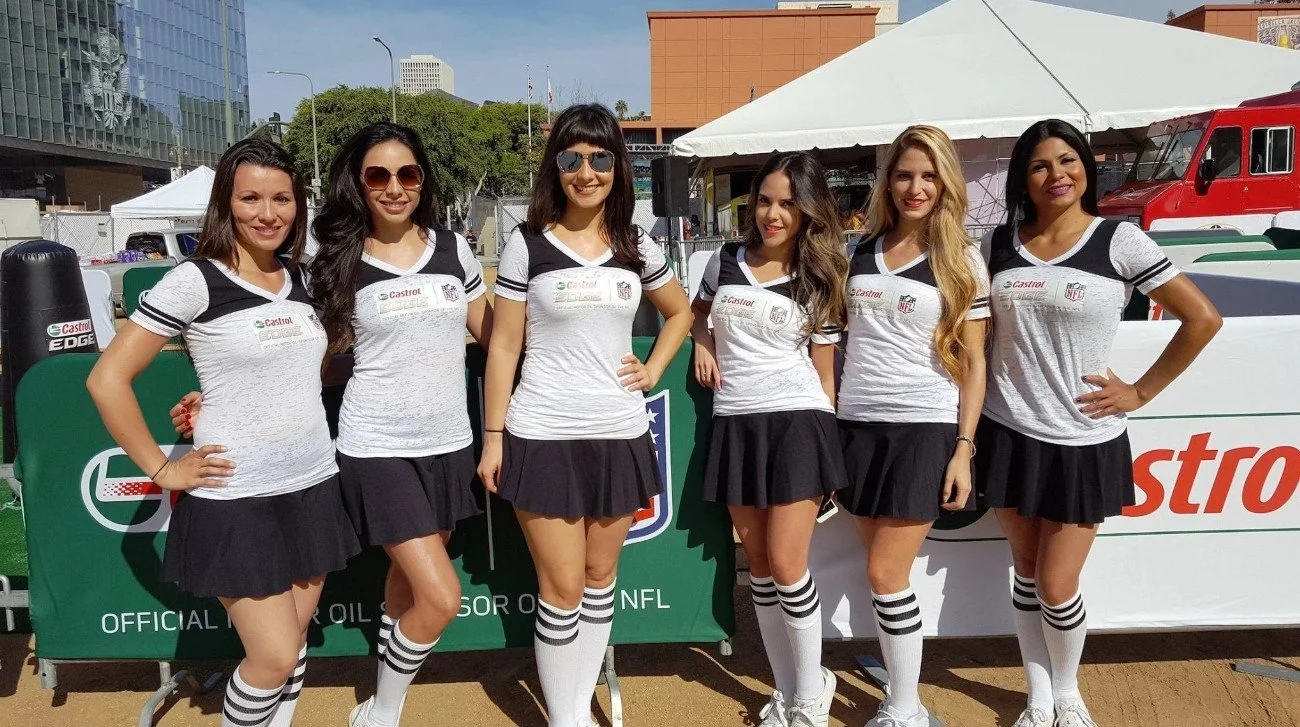
Daily check-ins matter because they catch problems while there is still time to fix them. For Castrol’s Super Bowl program with agency Octagon, Event Staffing Live booked 12 spokesmodels per day, created schedules, set street-team routing, handled payroll, ran background checks on brand ambassadors, and held daily check-in calls. That same discipline works on a smaller activation: a daily check-in gives your team time to correct course before the client asks why a number is missing.
Photos, Quotes, and Proof
Visual proof makes the report feel real. Include six to ten strong images rather than a large unorganized gallery. Choose photos that show staff in position, ambassadors engaging consumers, product sampling or demonstrations, high-traffic periods, the branded footprint, and the team working together.
Add two or three short quotes from consumers, staff, or field managers. Label consumer feedback as reported feedback unless you have written permission to use it as a testimonial. Avoid images that expose personal information or violate venue or client privacy requirements.
Make content capture part of the staffing brief, not an afterthought. Before the event, agree on who will capture photos and video, which shots are required, how files will be named, when the client will receive the gallery, and what cannot be photographed.
For a national tour, consistency matters even more. Event Staffing Live supported the Grow with Google National Tour across multiple markets, the kind of program where each city needs comparable reporting so the client can see performance across the full tour rather than only city by city.
Turning the Recap Into the Next Booking
A great event recap report should make the next booking easier to win.
Close with a short next-steps section. Confirm when leads and content assets will be delivered, schedule a short recap call with the client, ask which metrics they want emphasized next time, recommend the next activation or market, and request feedback on your agency’s execution and reporting.
This turns a one-off report into an account-building tool. Your client sees not only what happened, but that your team can make the next program easier to plan, staff, measure, and improve.
For lead-generation programs, connect the recap directly to your lead-capture process. ESL’s guide to lead capture at events explains how trained staff turn event conversations into measurable pipeline. For a broader view of what to measure, see ESL’s guide to event engagement and ROI.
FAQ
How Soon After an Event Should an Agency Send an Event Recap Report?
Send a same-day or next-morning summary with headline results, lead totals, and any issues. Deliver the full event recap report within three to five business days, once photos, lead files, and manager notes are complete.
What Should Be Included in a Post-Event Report?
Include the program snapshot, results against plan, engagement and conversion metrics, staffing performance, photos and quotes, incidents and fixes, and recommendations for the next activation.
How Long Should an Event Recap Report Be?
For most agency activations, two to four pages is enough. Use appendices for daily logs, full staff schedules, raw lead exports, and extended photo galleries.
Who Should Write the Event Recap Report?
The account lead should own the client-facing report, while field managers and brand ambassadors supply the on-site data. Your staffing partner should provide staff coverage, engagement activity, incidents, and daily observations in a format your team can use immediately.
Get Reporting Built In
Need event staff who show up, engage properly, capture clean data, and give your team what it needs for the client recap? Talk to Event Staffing Live about reporting built into your staffing program.
