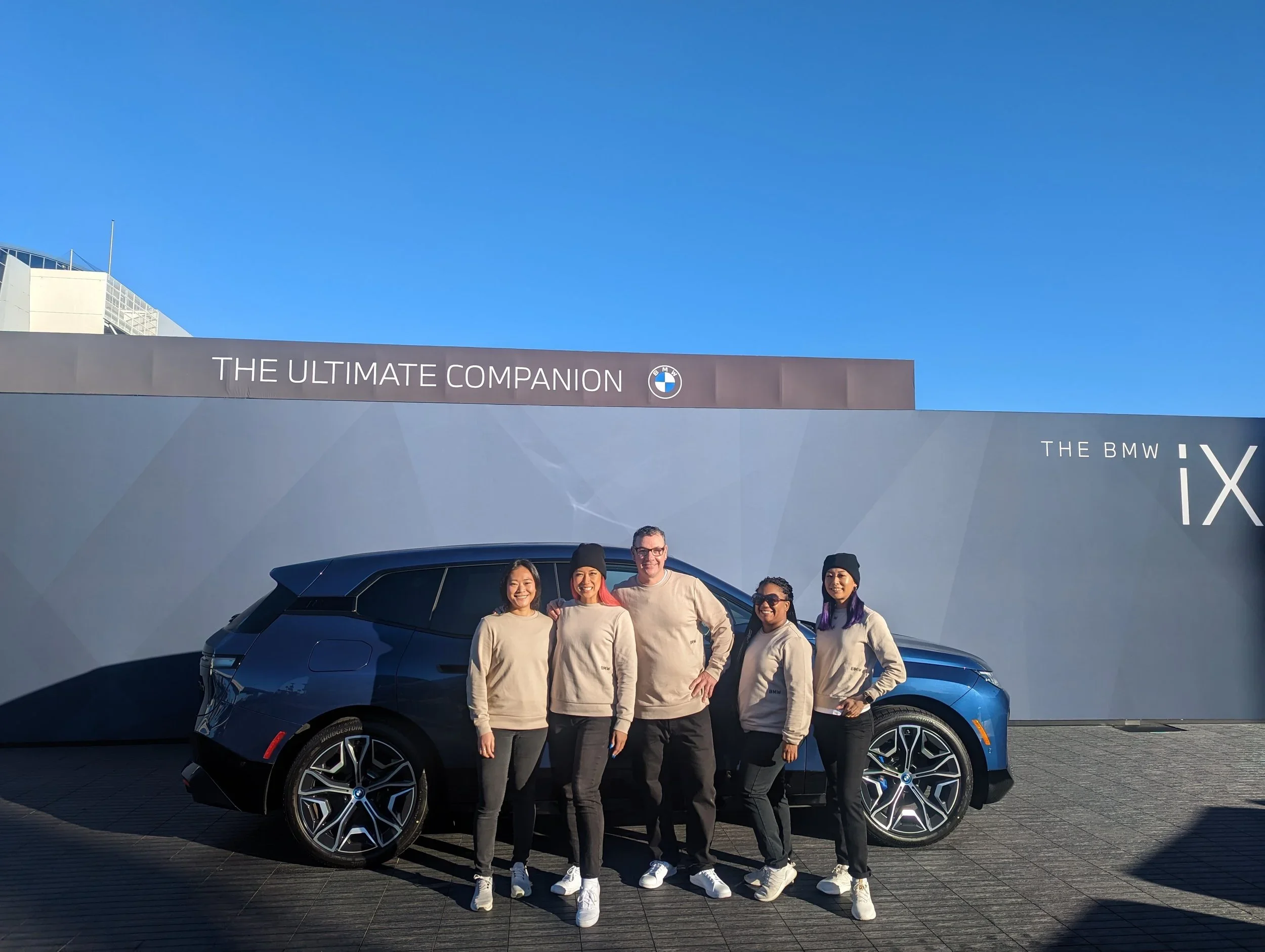
Our Brand Ambassadors staff for BMW event
An event brand ambassador is a trained, on-site representative who introduces your client’s brand to consumers, explains its offer, and encourages a specific action. For agencies, event brand ambassadors are the people who make a sampling program, street team, tour stop, trade show booth, or pop-up feel organized, credible, and on-brand.
This guide is for agency producers, account leads, and operations directors who subcontract event staffing. It explains what event brand ambassadors do, the skills to cast for, how they differ from field managers and tour staff, and how to brief a staffing partner so your program runs cleanly. ESL provides nationwide event staffing for agencies, including brand ambassadors for consumer and B2B programs.
What an Event Brand Ambassador Does
An event brand ambassador represents a brand in person at a live activation. They start conversations, explain the product or campaign, distribute samples or materials, answer questions, and guide people toward the action your client wants—such as trying a product, scanning a QR code, joining a list, or speaking with a sales representative.
The role is more than handing out flyers. A good event brand ambassador understands the campaign objective, follows the approved messaging, protects the client’s brand standards, and knows when to escalate an issue to a field manager or agency contact.
For your program, the ambassador is often the first person a consumer meets from the brand. That makes casting, training, and clear direction just as important as the creative concept.
Duties by Activation Type
Event brand ambassadors do different work depending on the activation. The best staffing plan matches the ambassador’s strengths to the environment, audience, and desired outcome.
Product Samplings and Retail Programs
In grocery, convenience, liquor, and big-box retail, brand ambassadors introduce products to shoppers and encourage trial. They may set up and maintain a display, restock sampling materials, explain product benefits, follow retailer and age-verification rules, and invite shoppers to purchase or scan a code.
These programs require people who are outgoing but not pushy. Your ambassadors need to engage shoppers quickly, respect the store environment, and keep the setup clean and compliant across a full shift.
Street Teams and Mobile Tours
Street teams take a brand into high-traffic areas such as downtown corridors, campuses, transit hubs, festivals, and entertainment districts. Event brand ambassadors distribute samples, flyers, or promotional items and start short conversations that make the campaign feel relevant rather than intrusive.
On a mobile tour, ambassadors may work beside a branded vehicle, pop-up, or experiential installation. Their job is to draw attention, guide people through the experience, communicate the message, and capture leads or encourage a follow-up action.
For the Castrol Motor Oil at Super Bowl program, ESL staffed for agency Octagon from 2012 through 2019 across Super Bowl week and game day. ESL booked 12 spokesmodels per day, ran background checks on every brand ambassador, created schedules, set street-team routing, handled payroll, and made daily check-in calls.
Festivals, Concerts, and Sporting Events
At festivals, concerts, and sporting events, ambassadors may work sponsor footprints, sampling areas, VIP spaces, entrances, or branded lounges. They welcome attendees, explain sponsor benefits, distribute product, encourage participation, and keep the activation running smoothly.
These environments demand stamina, crowd awareness, and consistent energy over long shifts. Your ambassadors also need to follow venue rules, safety procedures, and client-specific guidelines.
Trade Shows and B2B Programs
At trade shows and conferences, event brand ambassadors support booth traffic, lead capture, appointment setting, product demonstrations, and attendee engagement. They may scan badges, qualify prospects, distribute collateral, schedule meetings, or direct serious leads to your client’s sales team.
For B2B programs, professionalism and product fluency matter. The ambassador should recognize a relevant prospect, communicate the value proposition clearly, and hand off qualified leads without slowing down the sales conversation.
Pop-Ups, Launches, and Experiential Activations
Pop-ups, product launches, and experiential activations rely on ambassadors to create the atmosphere and guide guests through the experience. They greet visitors, explain the concept, manage lines, support interactive or photo moments, and encourage social participation.
These programs need ambassadors who can follow a detailed brand brief while still sounding natural. The goal is consistent, confident communication; not a memorized script.
Skills and Traits to Cast For
Do not cast event brand ambassadors based only on availability or a polished headshot. The right person for your client’s program depends on the setting, audience, product, and level of responsibility.
Look for these traits:
Clear communication: They can explain the offer simply, listen to questions, and adjust their approach for different people.
Approachability: They can start a conversation without making a consumer feel pressured.
Product comprehension: They understand the product, campaign message, common questions, and prohibited claims.
Reliability: They arrive on time, follow instructions, maintain a professional appearance, and complete the full shift.
Adaptability: They can handle changes in foot traffic, weather, venue rules, or campaign pacing without losing composure.
Sales awareness: They understand how to encourage a trial, lead, or purchase without being aggressive.
Brand judgment: They know what to say, what not to say, and when to escalate an issue.
Teamwork: They coordinate well with field managers, agency contacts, venue staff, and other ambassadors.
ESL’s services include brand ambassadors, product-demo specialists, street teams, event managers, tour managers, and regional managers for consumer and B2B events.
Brand Ambassador vs. Field Manager vs. Tour Staff
Event brand ambassadors, field managers, and tour staff support different parts of a program. Knowing where each role fits helps you build a staffing plan that protects the client experience and reduces operational risk.
Event Brand Ambassador
An event brand ambassador engages with consumers, communicates the brand message, distributes promotional materials or product samples, and encourages people to take a desired action. This role works well for local activations, product samplings, street teams, retail programs, festivals, and pop-up events.
Field Manager
A field manager oversees event staff, coordinates on-site logistics, resolves problems, checks compliance, and serves as the main operational point of contact. This role is best suited to larger teams, complex venues, multi-site programs, and high-stakes activations.
Tour Staff
Tour staff support traveling programs as they move from one market to another. Team members often handle specialized responsibilities based on the tour format and operational needs. This role is a good fit for national tours, mobile marketing programs, multi-city product launches, and recurring event series.
How Agencies Book and Brief Ambassadors
A strong brand ambassador program starts before the first shift. Give your staffing partner enough detail to source the right people, prepare them properly, and keep the program accountable in the field.
Define the Program Objective
Start with the result your client needs: product trial, awareness, leads, retail sell-through, social engagement, appointments, or another measurable action. The objective should drive the ambassador profile, staffing count, training, and reporting plan.
Share the Brand and Campaign Brief
Your brief should include the brand voice, target audience, product details, approved messaging, prohibited claims, dress code, key talking points, desired consumer action, and compliance requirements. For regulated categories, such as alcohol, make compliance direction explicit before staff arrive on-site.
Match Talent to the Environment
A high-energy festival ambassador may not be the right fit for a quiet B2B conference. A technical product demonstration may require someone with stronger product knowledge or sales experience. Cast for the setting, audience, and objective—not just for availability.
Confirm Logistics and Expectations
Before booking, confirm dates, hours, locations, reporting structure, dress code, pay terms, materials, lead-capture process, and venue-specific requirements. Clear logistics reduce no-show risk and help ambassadors arrive prepared.
Debrief and Improve
After the activation, review attendance, engagement quality, lead volume, consumer feedback, photos, and operational issues. Use that information to improve the next market and give your client a clearer view of program performance.
ESL can place from one to 1,000 brand ambassadors, and every staff member is a W-2 employee of ESL rather than a contractor of your agency.
When Agencies Book Event Brand Ambassadors
Book event brand ambassadors when your client’s program depends on person-to-person engagement. If the campaign needs sampling, product education, lead capture, retail sell-through, or a strong on-site brand presence, ambassadors are usually central to the outcome.
Common scenarios include:
A CPG brand launching a product and needing in-store sampling.
A beverage brand building awareness at festivals, bars, concerts, or sporting events.
A technology company generating qualified leads at a trade show.
A retailer supporting a grand opening, seasonal campaign, or local market push.
A travel, hospitality, or lifestyle brand activating a pop-up or experiential installation.
An agency running a multi-city tour that needs reliable talent market after market.
ESL’s all-W2 model means its staffers are ESL’s legal employees, not your agency’s contractors. That structure is designed to take classification risk, liability, and potential IRS classification pressure off your company.
FAQ
What Does an Event Brand Ambassador Do?
An event brand ambassador represents a brand at a live activation by engaging consumers, explaining the product or offer, distributing materials or samples, answering questions, and encouraging a desired action. They may also support lead capture, retail sell-through, social engagement, and on-site operations.
How Is an Event Brand Ambassador Different From General Event Staff?
General event staff may focus on registration, wayfinding, setup, crowd support, or basic logistics. An event brand ambassador is briefed to represent the client’s brand, communicate campaign messaging, and create meaningful consumer interactions.
How Many Brand Ambassadors Does an Activation Need?
Staffing needs depend on the venue, expected traffic, program duration, number of engagement points, and campaign objective. A small sampling program may need one or two ambassadors, while a national tour, festival presence, or large-scale activation may require dozens or hundreds. ESL can place from one to 1,000 brand ambassadors.
How Far Ahead Should an Agency Book Event Brand Ambassadors?
Book as early as the program scope is known. Earlier booking gives the staffing partner more time to source, vet, brief, and confirm the right talent—especially for weekend shifts, holiday periods, specialized roles, or multi-market programs. For major national events, ESL begins pre-booking staff nine months ahead, sends event overviews to confirmed staff, and runs BA Immersion Training.
Staff Your Program
If you need experienced event brand ambassadors for a sampling program, street team, tour, trade show, pop-up, festival, or B2B activation, contact Event Staffing Live to staff your program.
For a broader staffing plan, see ESL’s event staffing services, Brand Ambassador Staffing for Agency Programs, and Brand Ambassador Agencies.
Looking for event work? Visit ESL’s Work Here page to apply.
