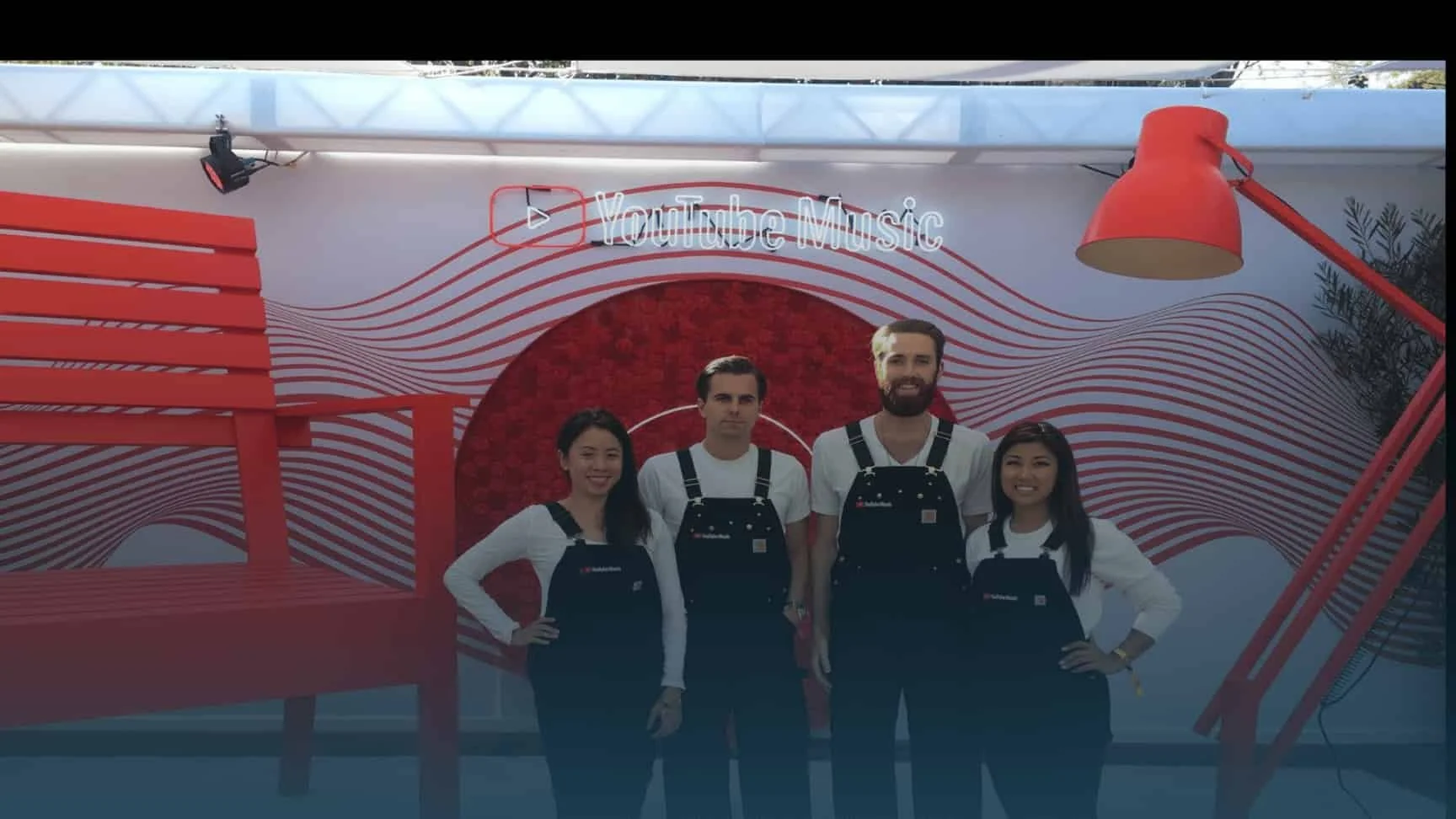
Event staffing for Youtube Music
Event staffing is the process of putting trained, brand-appropriate people into the roles an activation needs—brand ambassadors, event managers, demo specialists, street teams, hosts, tour staff and more. For agencies, it is the operational layer that turns a client’s creative idea into staffed, on-the-ground execution.
This guide is written for experiential, PR, sponsorship and field-marketing agencies that subcontract staffing. We’ll cover what event staffing includes, the roles it covers, the three ways agencies buy it, and how a staffing partner plugs into your program. If you need a partner for a single market or a national rollout, explore our event staffing services.
What Event Staffing Means
Event staffing is more than finding people to stand at an event. It is the end-to-end work of sourcing talent, confirming availability, briefing staff, managing schedules and call times, supervising execution, handling payroll, and reporting back to the agency.
A strong staffing partner protects the part of your program your client sees most: the person representing the brand. Your creative, fabrication, logistics and reporting can all be excellent, but a late, unprepared or off-brand ambassador can undo that work in front of a consumer.
For agencies, event staffing should feel like an extension of your own production team. You set the program objectives, brand guidelines and client expectations; the staffing partner supplies the right people, manages the labor side, and keeps the execution predictable.
At Event Staffing Live, we treat staffing as a turnkey service for agencies: nationwide talent, trained brand ambassadors and managers, and an all-W-2 employment model. Every staffer remains on our payroll, not yours, which keeps classification risk, liability and payroll administration away from your agency.
Roles Event Staffing Covers
“Event staffing” covers a wide range of roles, and the right mix depends on the activation, venue, audience and client objective.
Brand ambassadors engage consumers, explain the brand story, distribute samples or materials, capture leads and create a positive brand experience. They are the frontline of sampling programs, pop-ups, retail activations and sponsor footprints.
College brand ambassadors represent a brand on campus, activate at student events and help agencies reach college audiences authentically. Student brand ambassadors are a younger subset of that group, often recruited for campus-specific reach, energy and peer-to-peer credibility. They are especially valuable for campus tours, student sampling, athletics and lifestyle programs.
Street teams work high-traffic outdoor locations to distribute materials, drive awareness and support a larger activation. They are common in product launches, city tours and festival footprints.
Product demo specialists explain features, answer questions and demonstrate a product in a way that feels natural and on-brand. They are often used in retail, grocery, tech and CPG programs.
Event managers supervise staff, manage call times, solve day-of issues and serve as the agency’s on-site point of contact. Tour managers travel with a program, manage local staff and logistics, and maintain consistency from market to market. Regional managers provide local oversight across a defined territory, often supporting recurring or multi-market programs.
Hosts, emcees and spokesmodels welcome guests, present on stage or on camera, guide attendees and bring personality to the brand. Conference and trade-show staff support registration, booth engagement, breakout rooms, greeters, bus hosts and general operations. Costume characters and mascots bring a visual brand element to life while staying on-message and guest-friendly.
Three Ways to Buy It: W-2 Agency, Marketplace, In-House
Agencies generally buy event staffing in one of three ways: through a W-2 staffing agency, through a marketplace, or by building an in-house staffing function. Each model changes who carries the operational risk, how quickly you can scale, and how much work lands on your team.
W-2 Staffing Agency
A W-2 staffing agency sources, employs and manages the staff on your behalf. The agency handles recruiting, payroll, insurance, scheduling, staff communication and often day-of supervision.
This is the model we use at Event Staffing Live. Every staff member is a W-2 employee of ESL, which means they are our legal employees, not your contractors. That structure is designed to reduce classification pressure, liability and administrative burden for the agency and its client.
For an agency selling “we staff nationally” to its client, this model is often the cleanest. You retain control of the creative brief and client relationship, while the staffing partner takes responsibility for the labor execution.
This approach is best for national programs, multi-market tours, high-profile activations, recurring programs and any agency that needs staffing to be dependable rather than another internal workload.
Staffing Marketplace
A staffing marketplace lets an agency post a role, review available workers and book them directly. It can be useful for a simple, local, last-minute need where the agency has time to manage the details.
The tradeoff is ownership. Your team may still need to write the brief, screen candidates, confirm availability, manage no-show risk, communicate call times, handle issues on site and manage payment or classification questions.
A marketplace can work well when the role is straightforward and the agency has strong local operations. It becomes harder to manage when you need consistent brand representation across markets, specialized talent, background checks, supervision or a national footprint.
This approach is best for simple local fills, agencies with internal staffing operations, and programs where the agency wants direct control of individual worker relationships.
In-House Staffing
Some agencies build an internal staffing team: a recruiter or staffing manager, a talent database, scheduling tools, payroll processes and field supervisors. This gives the agency maximum control and can make sense for a high-volume, recurring staffing business.
But it also turns staffing into a core operational function. You inherit recruiting, compliance, payroll, insurance, training, staff retention, last-minute replacements and the reputational risk when someone does not show up.
For most experiential, PR, sponsorship and field-marketing agencies, the better question is not “should we staff everything ourselves?” It is “where should our team spend its time?” If your value is strategy, creative, client service and program management, a staffing partner can protect those priorities.
This approach is best for agencies with sustained, high-volume staffing demand and the internal infrastructure to manage employment, compliance and field operations.
How Agencies Use a Staffing Partner
A staffing partner should plug into your existing program workflow, not force you to rebuild it. The best partnerships are simple: you own the client and the creative; we own the staffing execution.
First, you share the program brief. That includes the markets, dates, venue types, audience, brand guidelines, staffing counts, deliverables and any special requirements.
Next, we align on the staffing plan. We recommend the roles, headcount, management structure and lead time needed to execute reliably.
Then we source and confirm talent. We draw from our national database and place the right staff for the market, role and brand.
After that, we brief and prepare staff. Staff receive the event overview, brand expectations, call times and any required training or background screening.
During the activation, event managers, tour managers or regional managers supervise the field team, handle issues and keep communication moving. Once the program ends, we support payroll, reporting and post-event communication so your team has what it needs for the client.
The key is clarity. Your SOW should define the deliverable—such as “12 brand-appropriate spokesmodels per day, background-checked, scheduled, routed and supervised”—rather than simply “staff the event.”
That is how we approached Castrol’s Super Bowl work for Octagon from 2012 through 2019. We booked 12 brand-appropriate spokesmodels per day, conducted security background checks on every brand ambassador, created ambassador schedules, set street-team routing, managed daily check-in calls from the promotions teams, and handled event-staff payroll.
For an agency, that is the difference between buying “staff” and buying a managed staffing program.
What a First Program Looks Like
A first program does not need to be complicated. In fact, the best first engagement is usually a contained activation where the agency can see how the staffing partner communicates, solves problems and protects the client experience.
A typical first program might include one to five markets, a defined activation window such as a weekend, festival footprint or retail flight, and a small team of brand ambassadors. An event manager may be added when headcount or program complexity requires one.
The brief should cover brand voice, product knowledge, lead capture, attire, arrival time and reporting. Both sides should have a named point of contact, and the program should close with a simple post-event report covering attendance, engagement, samples distributed, leads captured and any operational issues.
From there, the program can scale. We can place from one to 1,000 brand ambassadors, which makes it possible to start with a pilot market and expand into a national program without changing staffing partners.
Timing matters, especially for major events. For the ESL50—our list of the 50 most-staffed events in the U.S.—we begin pre-booking staff nine months in advance, send confirmed staffers event overviews, match early client bookings with initial brand ambassadors, and run BA Immersion Training on assigned activations.
That early planning is not just a nice-to-have. It is how an agency avoids competing for the strongest talent in markets where every brand wants experienced, reliable staff.
FAQ
What Is Event Staffing?
Event staffing is the sourcing, employment, scheduling, briefing and management of people who execute an event or activation. It includes brand ambassadors, event managers, demo specialists, street teams, hosts, tour staff and conference support.
What Roles Does Event Staffing Include?
Common roles include brand ambassadors, college brand ambassadors, student brand ambassadors, street teams, product demo specialists, event managers, tour managers, regional managers, spokesmodels, emcees, hosts, costume characters and trade-show staff.
Should an Agency Use a W-2 Staffing Agency or a Marketplace?
A W-2 staffing agency is usually the better fit when an agency needs consistency, national coverage, supervision, payroll handling and reduced administrative risk. A marketplace can work for simple local fills, but the agency typically retains more of the sourcing, communication and day-of management work.
How Far Ahead Should an Agency Book Event Staff?
For standard local activations, booking as early as possible gives the staffing partner more time to match the right talent. For major, high-demand events, agencies should plan much earlier; for ESL50 events, we begin pre-booking staff nine months ahead.
Get an Estimate for Your Next Program
If you are planning a sampling program, campus activation, street team, national tour, sponsor footprint or trade-show presence, we can help you build the staffing plan behind it. Get an estimate for your next program.
Before you brief a staffing partner, review 12 questions to ask an event staffing agency. For a closer look at the frontline role, read our guide to the event brand ambassador.
